Uncommon
Mammal#043
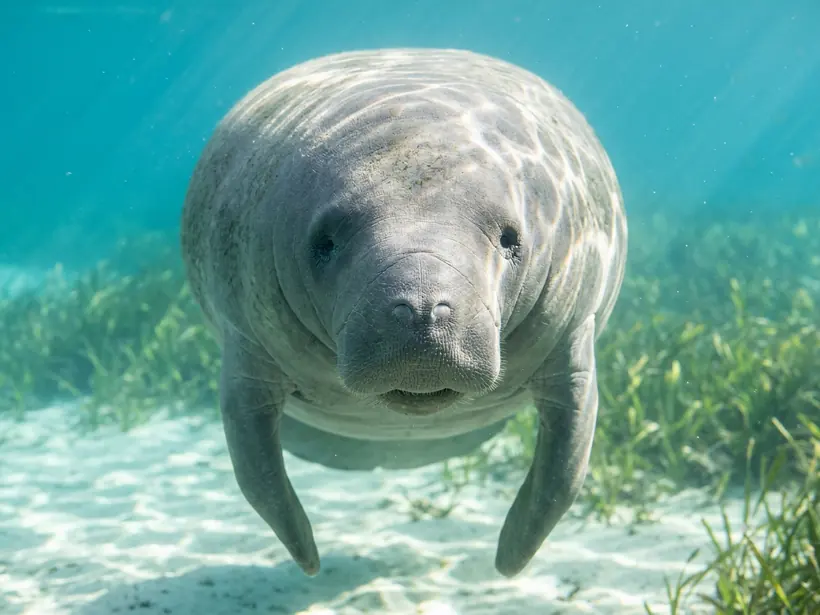
Warm coastal estuaries
West Indian manatee
Trichechus manatus
New "marching molars" continuously grow at the back of the jaw and slide forward to replace sand-worn teeth.
 WildlifeDex
Trichechus manatus
New "marching molars" continuously grow at the back of the jaw and slide forward to replace sand-worn teeth.
Species Card #043 · Mammal
Trichechus manatus
Slow-moving and wholly aquatic, the West Indian manatee spends hours peacefully grazing submerged meadows of turtle grass and freshwater vegetation. Despite a low metabolic rate and sparse fat insulation, it migrates into warm artesian springs whenever coastal waters chill in winter.
Field Note
New "marching molars" continuously grow at the back of the jaw and slide forward to replace sand-worn teeth.
Card tiers describe draw odds in WildlifeDex, not wild population size or extinction risk.
WildlifeDex Studio (AI-Assisted Naturalist Portrait) · WildlifeDex Site Terms