Uncommon
Reptile#116
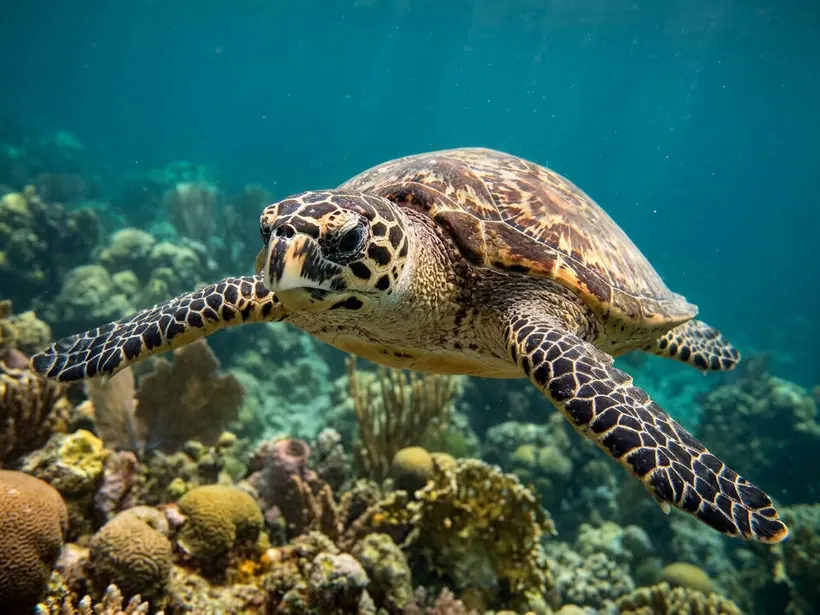
Healthy tropical coral reefs
Hawksbill sea turtle
Eretmochelys imbricata
It safely digests toxic coral-reef sponges packed with microscopic glass-like silica needles.
 WildlifeDex
Eretmochelys imbricata
It safely digests toxic coral-reef sponges packed with microscopic glass-like silica needles.
Species Card #116 · Reptile
Eretmochelys imbricata
Identified by its narrow, tapering raptor-like beak and overlapping amber-patterned carapace scutes with serrated rear margins, the hawksbill sea turtle acts as an essential reef steward. By pruning dominant sponges off reef ledges, it frees space for slower-growing reef corals to flourish.
Field Note
It safely digests toxic coral-reef sponges packed with microscopic glass-like silica needles.
Card tiers describe draw odds in WildlifeDex, not wild population size or extinction risk.
WildlifeDex Studio (AI-Assisted Naturalist Portrait) · WildlifeDex Site Terms