Common
Amphibian#069
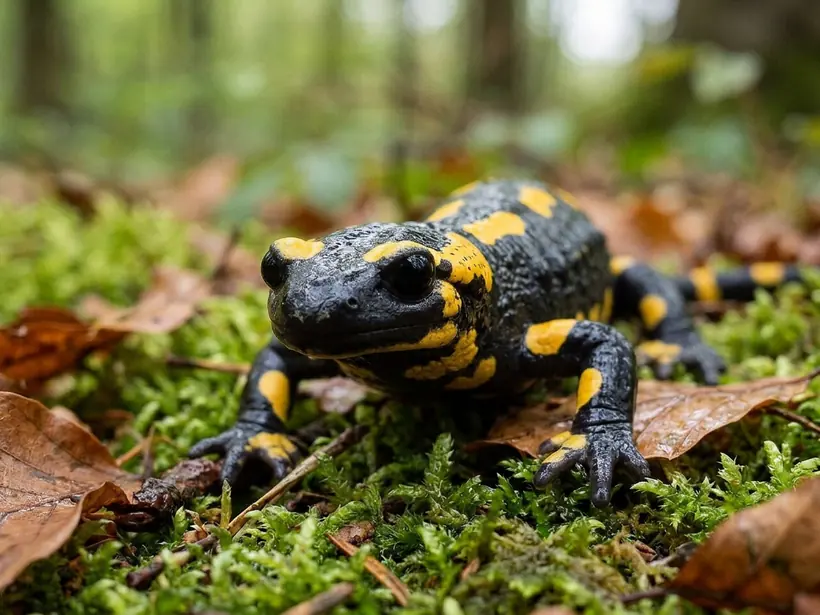
Shady deciduous beech and oak forests
Fire salamander
Salamandra salamandra
When threatened, muscles around glands behind its eyes can squirt defensive neurotoxic droplets accurately over a meter away.
 WildlifeDex
Salamandra salamandra
When threatened, muscles around glands behind its eyes can squirt defensive neurotoxic droplets accurately over a meter away.
Species Card #069 · Amphibian
Salamandra salamandra
Hiding beneath damp rotting logs and moss mats by day, the fire salamander emerges on rainy nights across old-growth European woodlands—a habit behind old folklore claiming it sprang from fireplace logs. Vivid yellow-on-black markings warn predators of alkaloid skin secretions.
Field Note
When threatened, muscles around glands behind its eyes can squirt defensive neurotoxic droplets accurately over a meter away.
Card tiers describe draw odds in WildlifeDex, not wild population size or extinction risk.
WildlifeDex Studio (AI-Assisted Naturalist Portrait) · WildlifeDex Site Terms