Uncommon
Invertebrate#127
Coastal tropical island forests
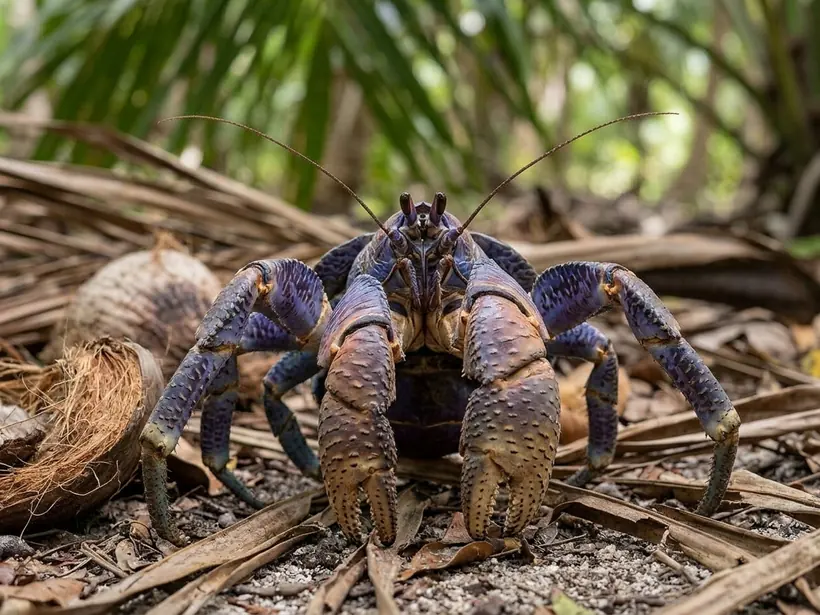
Coconut crab
Birgus latro
Claws pinching with over 3,000 newtons of force let this land-living crab peel husks and crack whole coconuts.
 WildlifeDex
Birgus latro
Claws pinching with over 3,000 newtons of force let this land-living crab peel husks and crack whole coconuts.
Species Card #127 · Invertebrate
Birgus latro
Heaviest terrestrial arthropod on Earth—spanning nearly a meter across the legs—the coconut crab begins life as a marine larva and wears borrowed snail shells as a juvenile hermit crab before hardening its own calcified abdominal armor and moving permanently onto land. In fact, fully grown adults drown if submerged underwater for long.
Field Note
Claws pinching with over 3,000 newtons of force let this land-living crab peel husks and crack whole coconuts.
Card tiers describe draw odds in WildlifeDex, not wild population size or extinction risk.
WildlifeDex Studio (AI-Assisted Naturalist Portrait) · WildlifeDex Site Terms