Common
Mammal#009
Freshwater wetlands
Capybara
Hydrochoerus hydrochaeris
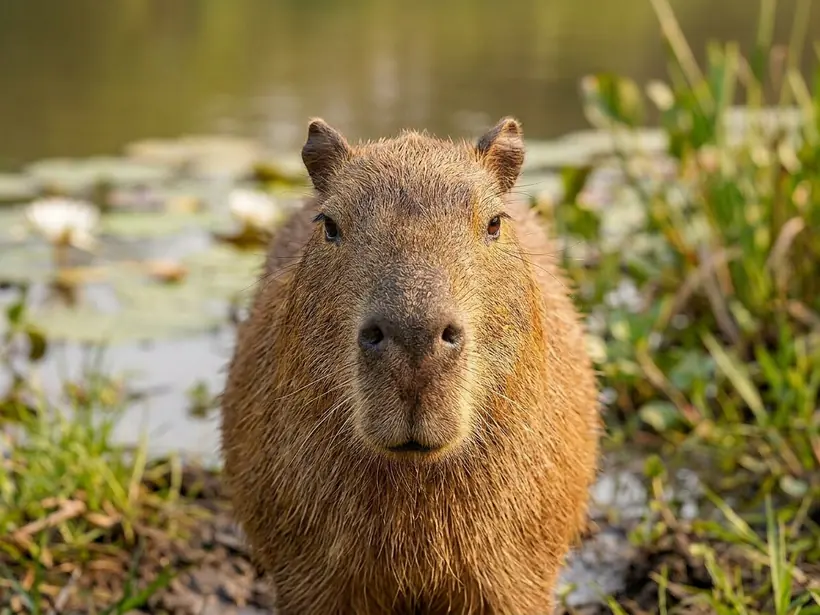
Its eyes, ears, and nostrils sit near the top of its head so it can stay mostly underwater while watching for predators.
 WildlifeDex
Hydrochoerus hydrochaeris
Its eyes, ears, and nostrils sit near the top of its head so it can stay mostly underwater while watching for predators.
Species Card #009 · Mammal
Hydrochoerus hydrochaeris
The world’s largest living rodent, the capybara is a semi-aquatic grazer built for life beside slow-moving rivers, marshes, and lagoons. Slightly webbed feet and high-set sensory organs let it rest almost completely submerged while keeping watch above the waterline.
Field Note
Its eyes, ears, and nostrils sit near the top of its head so it can stay mostly underwater while watching for predators.
Card tiers describe draw odds in WildlifeDex, not wild population size or extinction risk.
WildlifeDex Studio (AI-Assisted Naturalist Portrait) · WildlifeDex Site Terms