Rare
Invertebrate#126
Intertidal rock pools and rubble
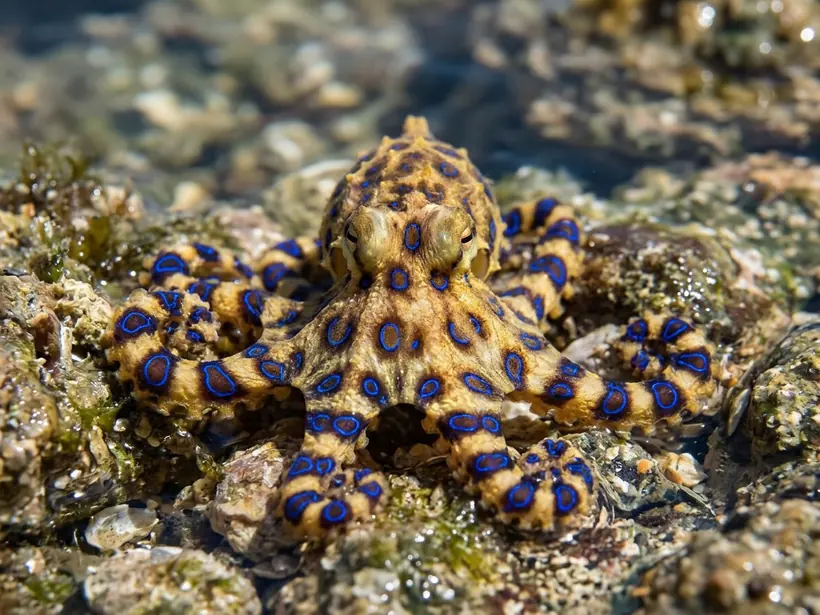
Southern blue-ringed octopus
Hapalochlaena maculosa
Symbiotic bacteria living inside its salivary glands produce tetrodotoxin—the exact same potent neurotoxin found in pufferfish.
 WildlifeDex
Hapalochlaena maculosa
Symbiotic bacteria living inside its salivary glands produce tetrodotoxin—the exact same potent neurotoxin found in pufferfish.
Species Card #126 · Invertebrate
Hapalochlaena maculosa
Small enough to rest comfortably in the palm of a shell, this docile tide-pool octopus normally stays camouflaged in muted sandy-ochre and brown mottling inside empty clam shells and rock crevices. Only when cornered do tiny muscles expand dark sacs over iridescent reflector cells—flashing up to 60 glowing electric-blue rings in a third of a second.
Field Note
Symbiotic bacteria living inside its salivary glands produce tetrodotoxin—the exact same potent neurotoxin found in pufferfish.
Card tiers describe draw odds in WildlifeDex, not wild population size or extinction risk.
WildlifeDex Studio (AI-Assisted Naturalist Portrait) · WildlifeDex Site Terms